
Moving into a new home is one of life’s most exciting milestones. It represents a fresh beginning, new opportunities, and a chance to create wonderful memories. However, amidst all the excitement, there is one challenge that almost every homeowner faces—packing fragile belongings safely.
From delicate glassware and expensive electronics to family heirlooms, decorative pieces, mirrors, and artwork, fragile items require special attention during relocation. Even a minor mistake during packing can result in cracked dishes, shattered glass, damaged electronics, or broken sentimental possessions that may be impossible to replace.
Many people assume that breakage only happens because of careless handling. In reality, fragile items are exposed to constant vibrations, sudden braking, uneven roads, loading and unloading impacts, and shifting cargo throughout the transportation process. Without proper packing techniques, even a short-distance move can result in unexpected damage.
The good news is that most breakage is completely preventable. With the right materials, proper planning, and professional packing methods, you can significantly reduce the risk of damage and ensure that your valuable belongings reach your new home safely.
Whether you’re moving within the city or planning a long-distance relocation, experienced relocation experts like Lokseva Packers and Movers always emphasize that careful packing is the foundation of a successful move. In this comprehensive guide, you’ll learn proven techniques used by professional movers to protect fragile belongings during relocation.
Before learning how to pack fragile items correctly, it is important to understand why damage occurs in the first place.
During transportation, moving trucks encounter a variety of conditions that can affect the safety of your belongings. Every speed breaker, pothole, sharp turn, and sudden stop creates movement inside the vehicle. If fragile items are not packed correctly, they can collide with one another or shift inside boxes.
Professional movers spend considerable time planning the packing process because they understand that proper preparation can prevent most moving-related damage.
The Bureau of Indian Standards (BIS) also highlights the importance of proper packaging and material protection during transportation. You can learn more about packaging and quality standards through the official BIS website: https://www.bis.gov.in/
When you understand the risks involved, it becomes much easier to take the right precautions before moving day.
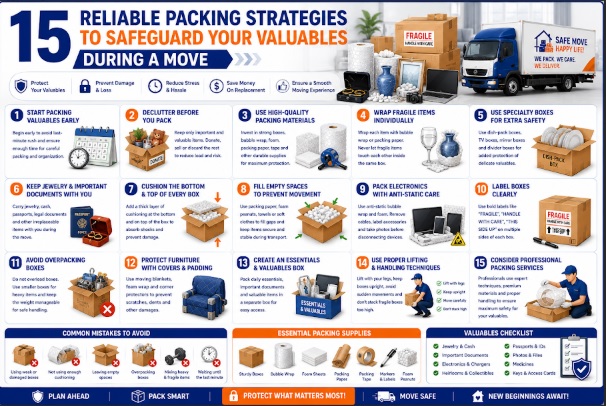
One of the biggest mistakes homeowners make is trying to save money by using old, damaged, or low-quality packing materials.
While it may seem economical at first, weak cartons and poor-quality packaging often result in damaged belongings that cost far more to replace than the packaging materials themselves.
Think of packing materials as insurance for your valuables. The stronger the protection, the lower the risk of damage.
If possible, purchase new cartons specifically designed for relocation. New boxes provide better structural integrity and are far more reliable than reused boxes that may already have weakened corners or damaged surfaces.
When relocating expensive items such as televisions, computers, glass furniture, or artwork, investing in specialized cartons can provide additional protection.
Many homeowners moving with Packers and Movers Aurangabad often discover that quality packing materials dramatically reduce the likelihood of damage during transportation.
Remember, quality packing supplies are not an expense—they are an investment in the safety of your belongings.
Moving presents the perfect opportunity to evaluate which items truly deserve a place in your new home.
Over the years, most households accumulate numerous decorative pieces, old kitchenware, damaged collectibles, and unused fragile items that simply occupy storage space.
Items you regularly use or genuinely value.
Useful items that can benefit others.
Valuable items that you no longer need.
Broken or recyclable materials.
Items beyond repair or no longer useful.
This simple exercise reduces the overall volume of belongings requiring protection and allows you to focus your efforts on preserving the items that matter most.
A lighter load not only reduces moving expenses but also simplifies the entire relocation process.
Choosing the correct carton size is far more important than many people realize.
A common mistake is placing fragile items in oversized boxes. While large cartons may seem convenient, they create excessive movement during transportation.
When items shift inside a box, the risk of breakage increases significantly.
The goal is to ensure that boxes remain manageable and easy to carry.
If a carton feels too heavy when lifted, it is likely overloaded.
Well-balanced cartons not only reduce breakage risks but also improve safety for the people handling them.
Use multiple layers of bubble wrap and secure them with tape.
Wrap with packing paper first, followed by bubble wrap.
Use foam sheets combined with bubble wrap.
Use anti-static wrapping materials whenever possible.
The extra time spent wrapping each item individually can save hundreds or even thousands of rupees in replacement costs later.
Most people instinctively stack plates flat on top of each other.
Surprisingly, this is one of the worst ways to transport them.
When plates are stacked horizontally, the weight of upper plates places continuous pressure on those underneath. During transportation, vibrations and sudden movements increase this stress, making cracks much more likely.
Professional movers use a completely different method.
They pack plates vertically, similar to records stored on a shelf.
This simple adjustment can dramatically improve the safety of your kitchenware during relocation.
In fact, experienced teams from Packers and Movers Ahmednagar frequently use vertical packing methods because they consistently deliver better protection for fragile dishes and glassware.
One of the simplest yet most overlooked packing techniques is cushioning the bottom of every carton before placing any fragile items inside.
Many people focus only on wrapping the item itself and forget that the box may be placed on the floor dozens of times during the moving process. Every time a carton is lifted, loaded, unloaded, or stacked, the contents experience small impacts.
Without proper cushioning, these impacts are transferred directly to the fragile items inside.
Professional movers always create a shock-absorbing base before packing delicate belongings.
Ideally, create a cushioning layer of at least 2 to 3 inches at the bottom of the carton.
Once the fragile items have been placed inside, add another protective layer on top before sealing the box.
Think of this method as creating a protective cocoon around your valuables. The cushioning absorbs shocks and vibrations that occur throughout transportation.
This simple step can significantly reduce the chances of breakage, especially during long-distance relocation.
Even perfectly wrapped items can break if they are allowed to move around inside the carton.
Movement is one of the biggest enemies of fragile belongings during transportation.
When a truck turns, brakes suddenly, or travels over uneven roads, unsecured items can shift inside the box and collide with one another.
This is why professional packers pay close attention to filling empty spaces.
Once your fragile items have been arranged inside the carton, inspect the remaining gaps.
The goal is to create a tightly packed environment where items remain stable throughout the journey.
A properly packed carton should not produce any movement when gently shaken.
If you hear items shifting inside, additional cushioning is required.
Many relocation experts at Lokseva Packers and Movers consider gap-filling one of the most important steps in preventing breakage because even the strongest wrapping cannot fully protect items that are constantly moving during transit.
Not all fragile items can be safely packed in ordinary cartons.
Certain belongings require specialized boxes specifically designed to provide additional protection during transportation.
Designed for plates, bowls, cups, and kitchenware.
Suitable for LED, LCD, and smart televisions.
Designed to protect mirrors and large glass surfaces.
Ideal for artwork, photographs, and framed decorations.
Contain compartments that separate individual glasses and cups.
These specialty cartons reduce movement and provide additional shock absorption.
While they may cost slightly more than regular cartons, they are often worth the investment when transporting valuable or irreplaceable items.
For expensive electronics, artwork, or heirlooms, specialized packaging can dramatically reduce the likelihood of damage.
The Bureau of Indian Standards (BIS) provides valuable information regarding packaging quality and material standards through its official website:
https://www.bis.gov.in/
Following quality packaging practices can help ensure a safer moving experience.
Mirrors and glass surfaces are among the most vulnerable items during any relocation.
Even a small impact can cause cracking or complete breakage.
Professional movers use multiple layers of protection when packing glass items.
Whenever possible, place mirrors and framed glass items inside mirror cartons or picture-frame boxes.
Caused by impact, vibration, and pressure.
Which can damage sensitive internal components.
Whenever possible, pack electronics using their original manufacturer’s packaging.
Original cartons are specifically designed to protect the product during transportation.
Anti-static bubble wrap provides excellent protection for electronic components.
Before disconnecting televisions, routers, gaming systems, or desktop computers, take photographs of the setup.
This makes reinstallation much easier later.
Any loose components should be secured to prevent internal damage.
Professional movers handling long-distance relocations often use additional foam inserts around expensive electronics for extra safety.
Families relocating through Packers and Movers Aurangabad frequently choose professional packing services for high-value electronics because specialized handling greatly reduces the risk of costly damage.
Proper preparation today can save significant repair or replacement expenses tomorrow.
Bonus Tip: Create a Fragile Items Inventory
Before sealing your cartons, prepare a simple inventory list.
Record:
You can also take photographs of valuable belongings before packing them.
Helpful Consumer Resources
When planning a move, you may also find useful information from the following Indian authority resources:
Even the best-packed fragile items can be damaged if movers are unaware that the contents require special handling.
This is why labeling is such an important part of the packing process.
Unfortunately, many homeowners spend hours wrapping delicate items but then place them inside completely unmarked cartons. During loading and unloading, these boxes may be stacked incorrectly or handled like ordinary household goods.
Professional movers use clear, visible labels on multiple sides of every fragile carton.
These labels should be written using thick permanent markers and placed on at least three sides of the carton.
For even better organization, consider color-coding boxes based on rooms.
For example:
This simple system helps movers place cartons in the correct rooms and makes unpacking much faster.
Many experienced relocation professionals at Lokseva Packers and Movers use detailed labeling systems because proper communication reduces handling mistakes and improves overall moving efficiency.
A common misconception is that placing more items inside a single carton saves space and reduces moving costs.
In reality, overpacked cartons are one of the leading causes of breakage during relocation.
When a box becomes too heavy:
While professional packing can protect most household belongings, certain valuable possessions deserve an additional level of security.
Whenever possible, transport highly valuable and irreplaceable items personally.
Examples include:
Many people focus entirely on packing methods while overlooking another critical factor—handling.
Even perfectly packed fragile items can break if they are lifted incorrectly or handled carelessly.
Professional movers follow specific lifting practices designed to minimize risk.
Lift with Your Legs
Avoid lifting heavy cartons using only your back.
Use your leg muscles to reduce strain and maintain better control.
Keep Boxes Upright
Fragile cartons should remain in their intended orientation throughout transportation.
Avoid Sudden Movements
Quick turns, drops, or jerky movements can damage delicate items inside cartons.
Never Drag Fragile Boxes
Dragging increases vibration and impact exposure.
Stack Carefully
Heavy boxes should always be placed below lighter cartons.
Fragile boxes should never support excessive weight.
Use Moving Equipment
Hand trolleys, dollies, and lifting straps reduce manual handling risks.
Experienced movers know that careful handling is just as important as proper packing.
Even the strongest carton cannot fully protect fragile items from repeated rough treatment.
While many homeowners prefer a DIY approach, there are situations where professional packing services can provide tremendous value.
This is especially true when relocating:
Even small packing mistakes can dramatically increase the chances of damage.
Here are some of the most common errors homeowners should avoid:
To further improve the safety of your fragile belongings:
Packing fragile items for moving does not have to be stressful or complicated. The key is careful preparation, quality packing materials, and attention to detail.
By following these proven techniques—using strong cartons, wrapping items individually, filling empty spaces, labeling properly, and handling boxes carefully—you can significantly reduce the risk of damage during relocation.
Every fragile item tells a story. Whether it is a family heirloom passed down through generations, a favorite piece of artwork, a collection of glassware, or an expensive electronic device, protecting these belongings should be a top priority during any move.
A successful relocation is not simply about reaching your destination. It is about ensuring that everything arrives safely, allowing you to settle into your new home without unnecessary stress or unexpected losses.
If you want complete peace of mind, working with experienced professionals such as Lokseva Packers and Movers can make a significant difference. Their expertise, proper packing techniques, and commitment to safe transportation help ensure that your valuable belongings remain protected from start to finish.
With proper planning, smart packing methods, and professional support when needed, you can enjoy a smooth, organized, and damage-free relocation experience.